

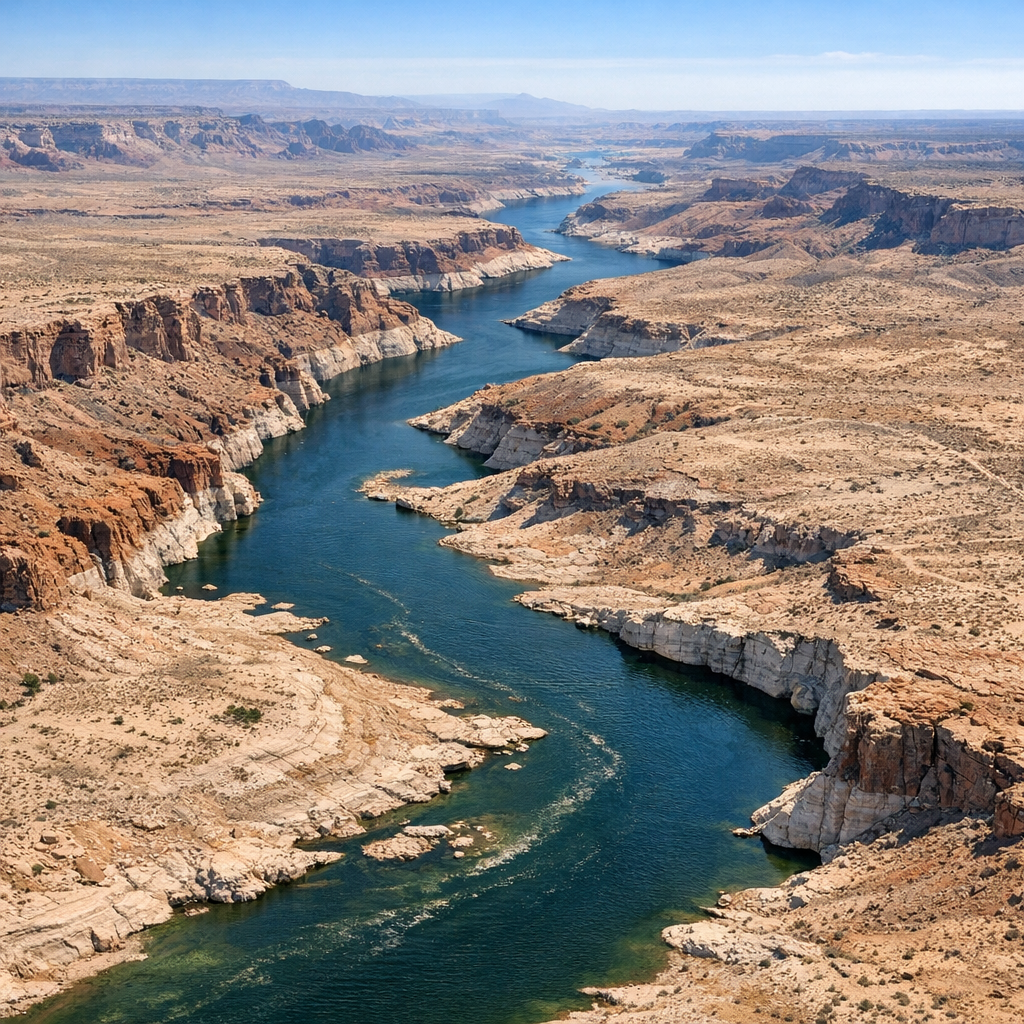
The Colorado River, a vital water source for approximately 40 million people across the western United States, is experiencing unprecedented declines in water levels. This situation has prompted federal and state officials to consider drastic measures to address the looming water shortage.
Background on the Colorado River
Originating in the Rocky Mountains, the Colorado River flows through seven U.S. states and into Mexico, supplying water for agricultural, industrial, and residential use. Over the years, increased demand and prolonged drought conditions have significantly reduced its flow.
Current Challenges
Recent reports indicate that the river’s reservoirs, including Lake Mead and Lake Powell, are at historically low levels. This decline threatens water supplies for cities, farms, and Native American communities. In response, states like California, Nevada, and Arizona have announced temporary plans to conserve water from the Colorado River.
National Implications
While Florida is geographically distant from the Colorado River, the crisis has broader national implications. The agricultural sector, heavily reliant on the river, may face production challenges, potentially leading to increased food prices nationwide. Additionally, energy production, particularly hydroelectric power generated from the river’s dams, could be affected, influencing energy markets across the country.
Conclusion
The Colorado River crisis underscores the importance of sustainable water management practices. As the situation evolves, it’s crucial for all Americans to stay informed and consider the broader impacts of regional environmental challenges.